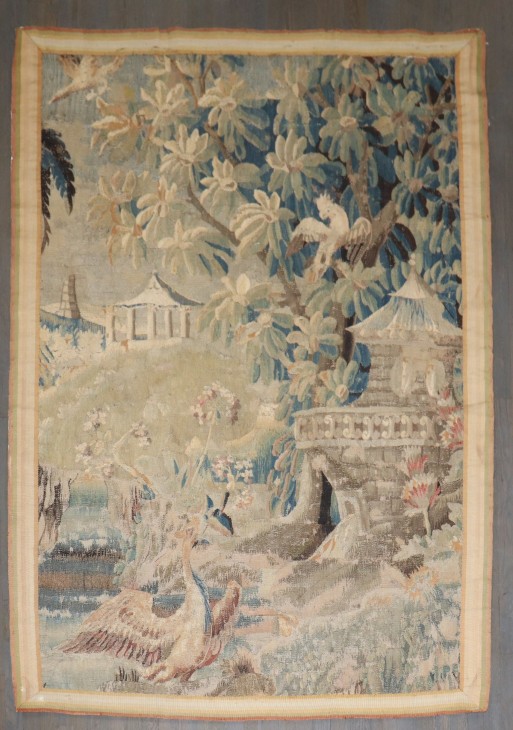
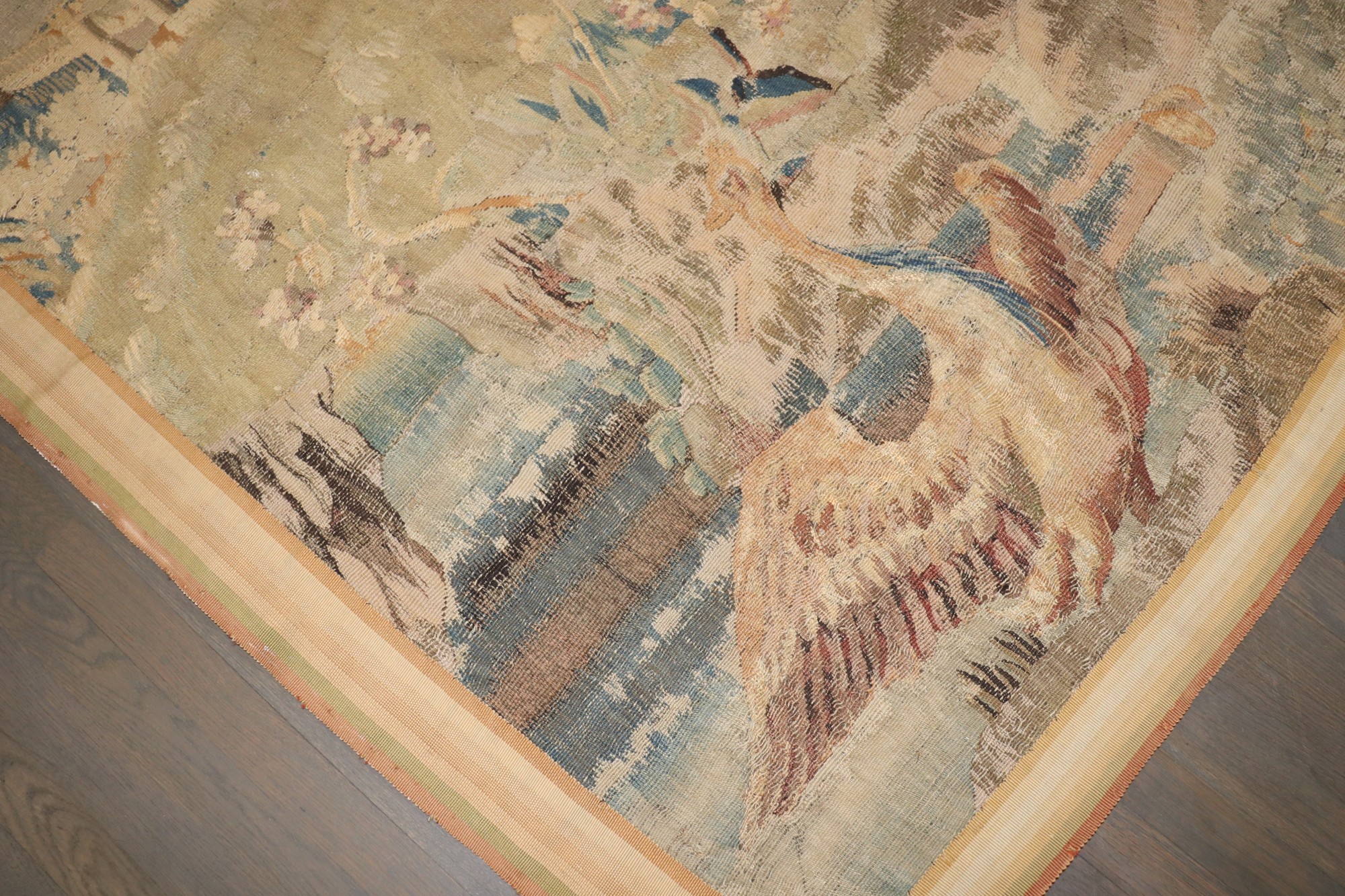
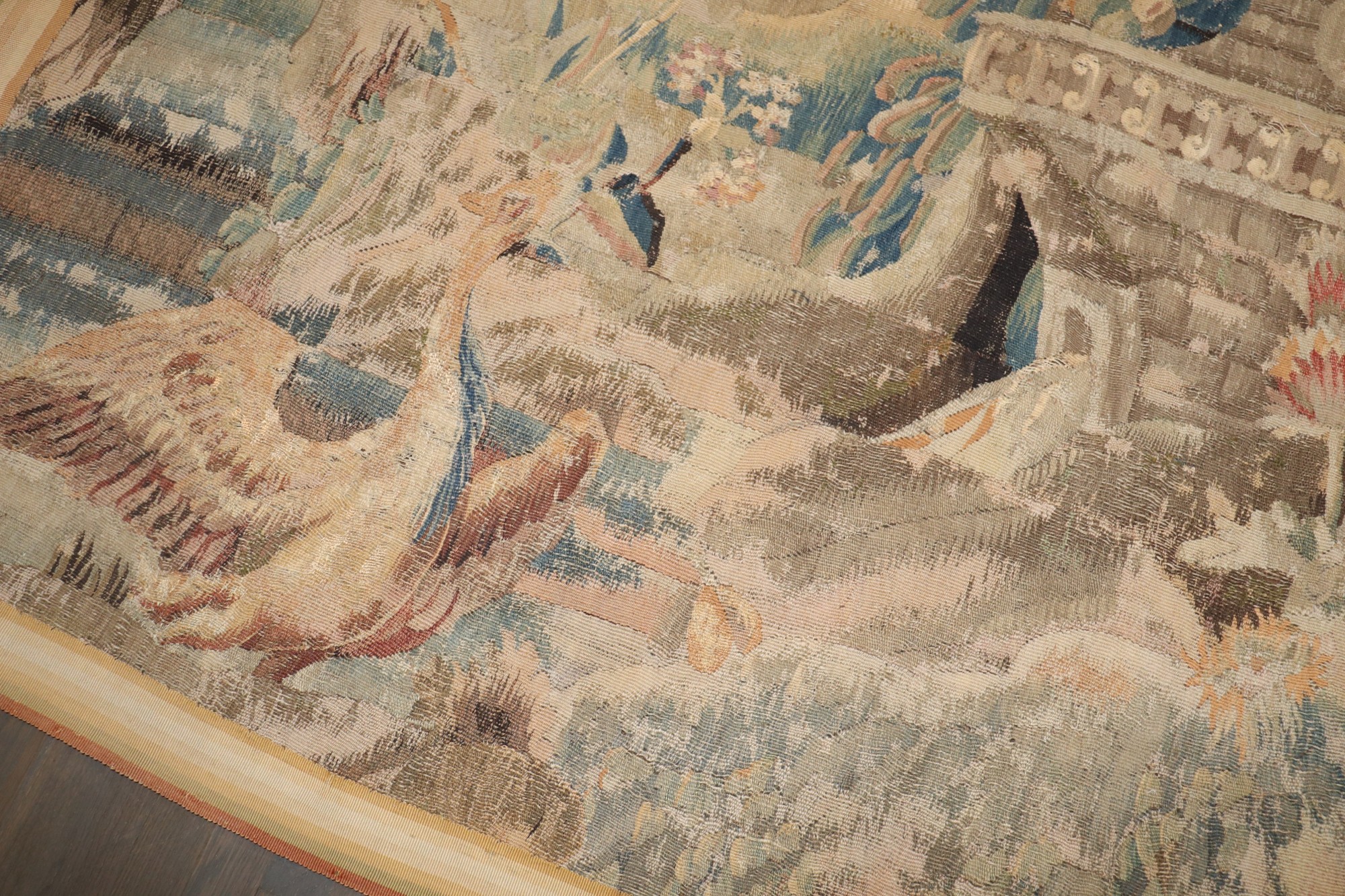
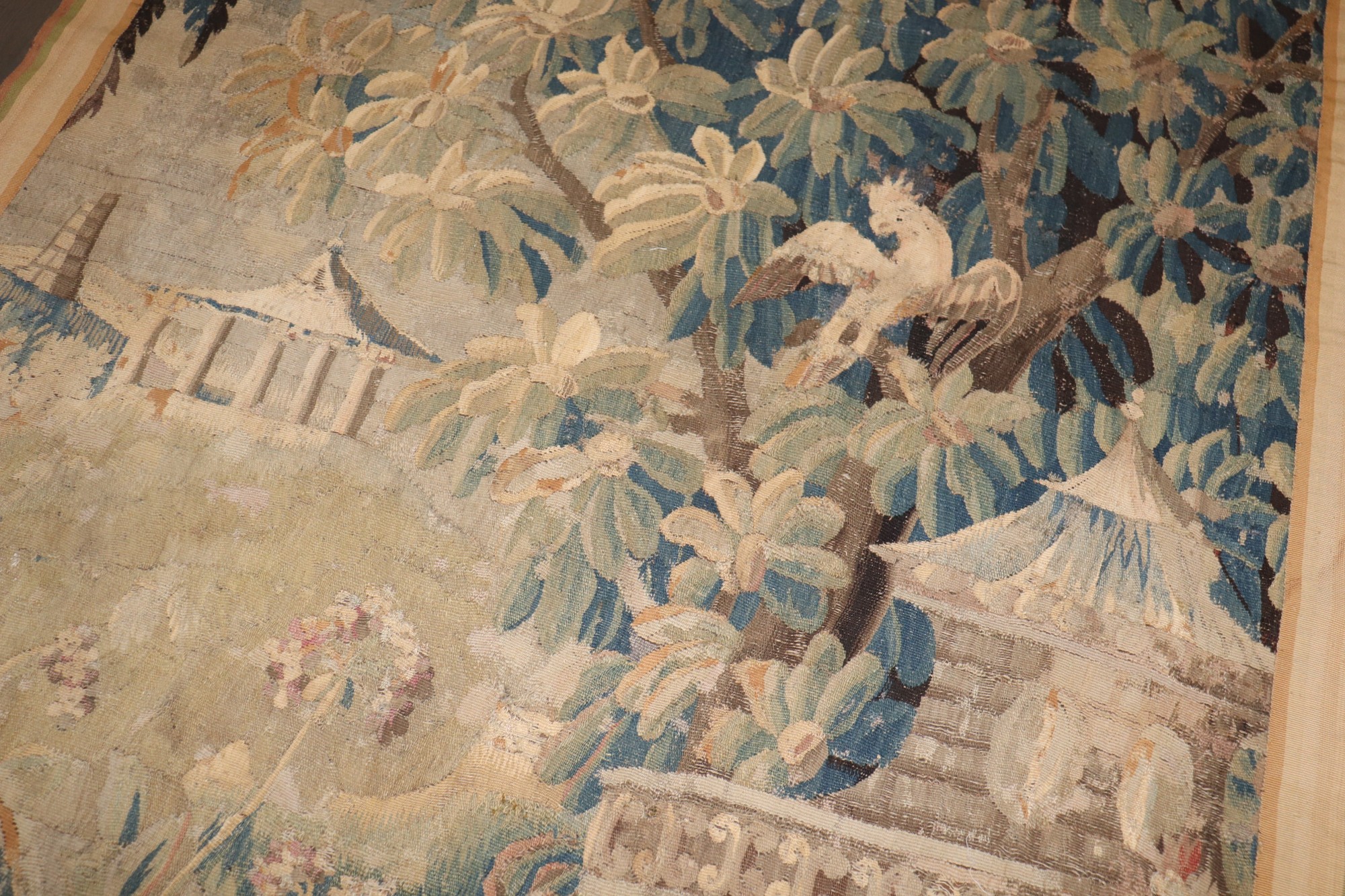
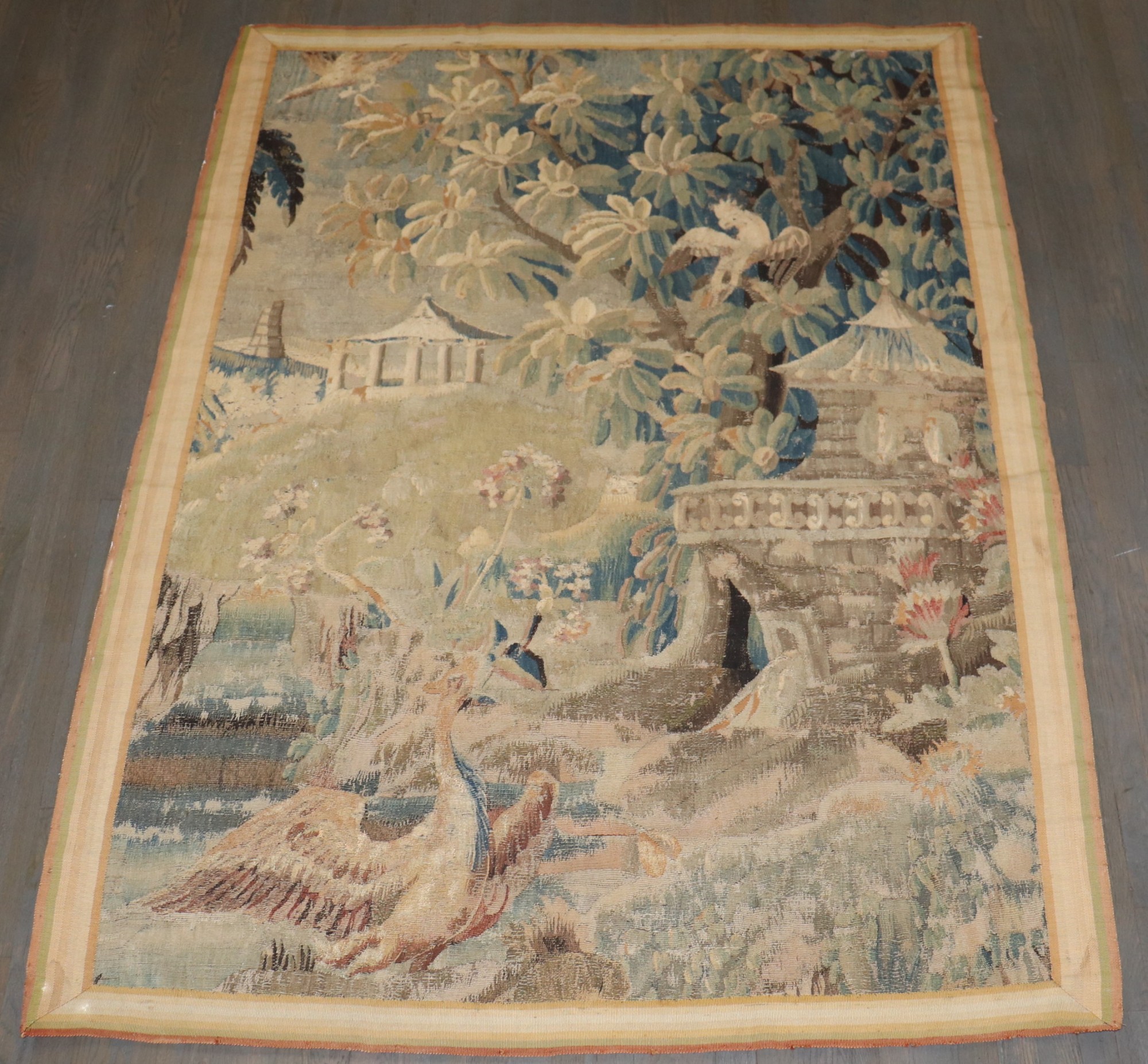
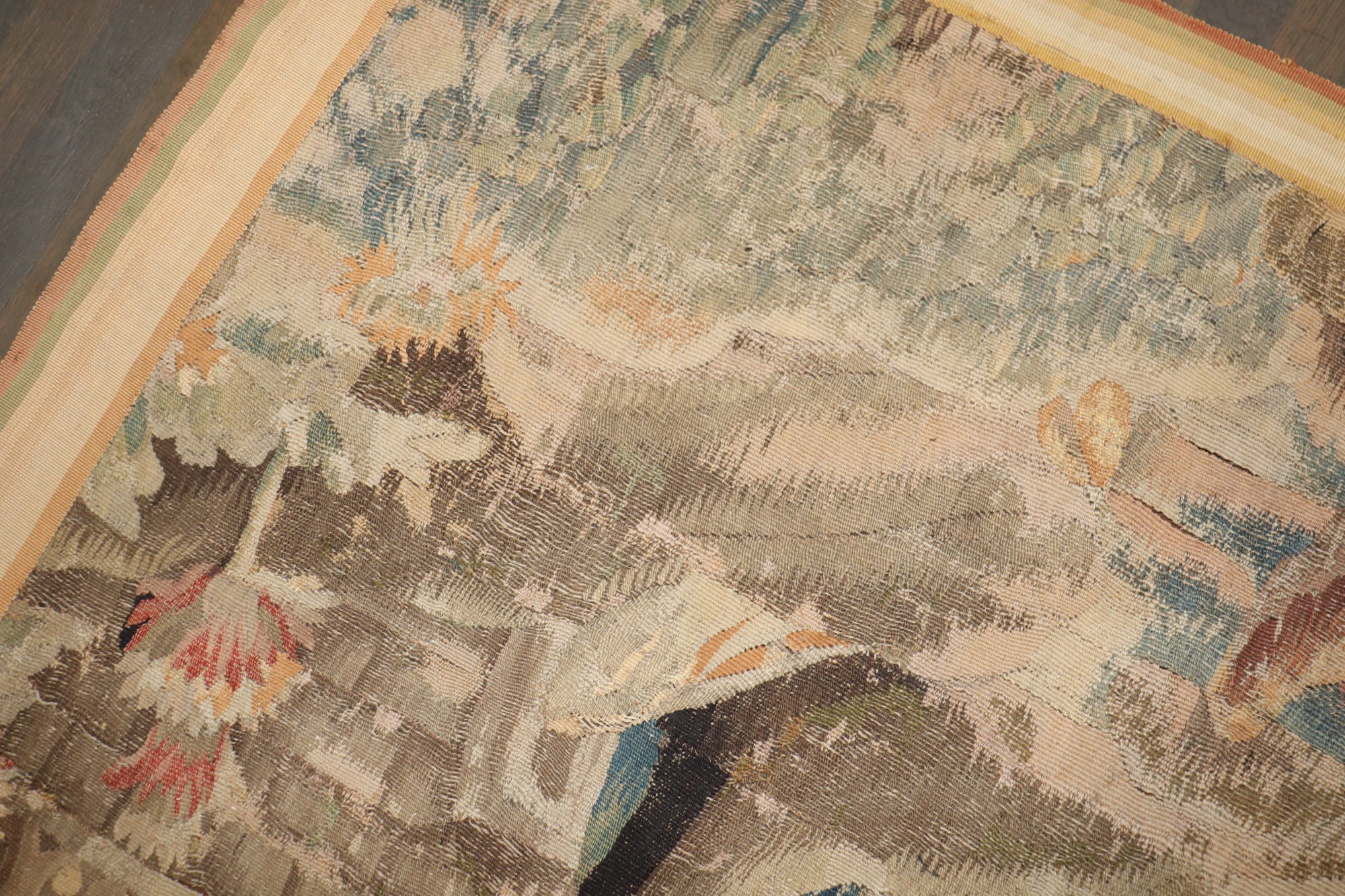
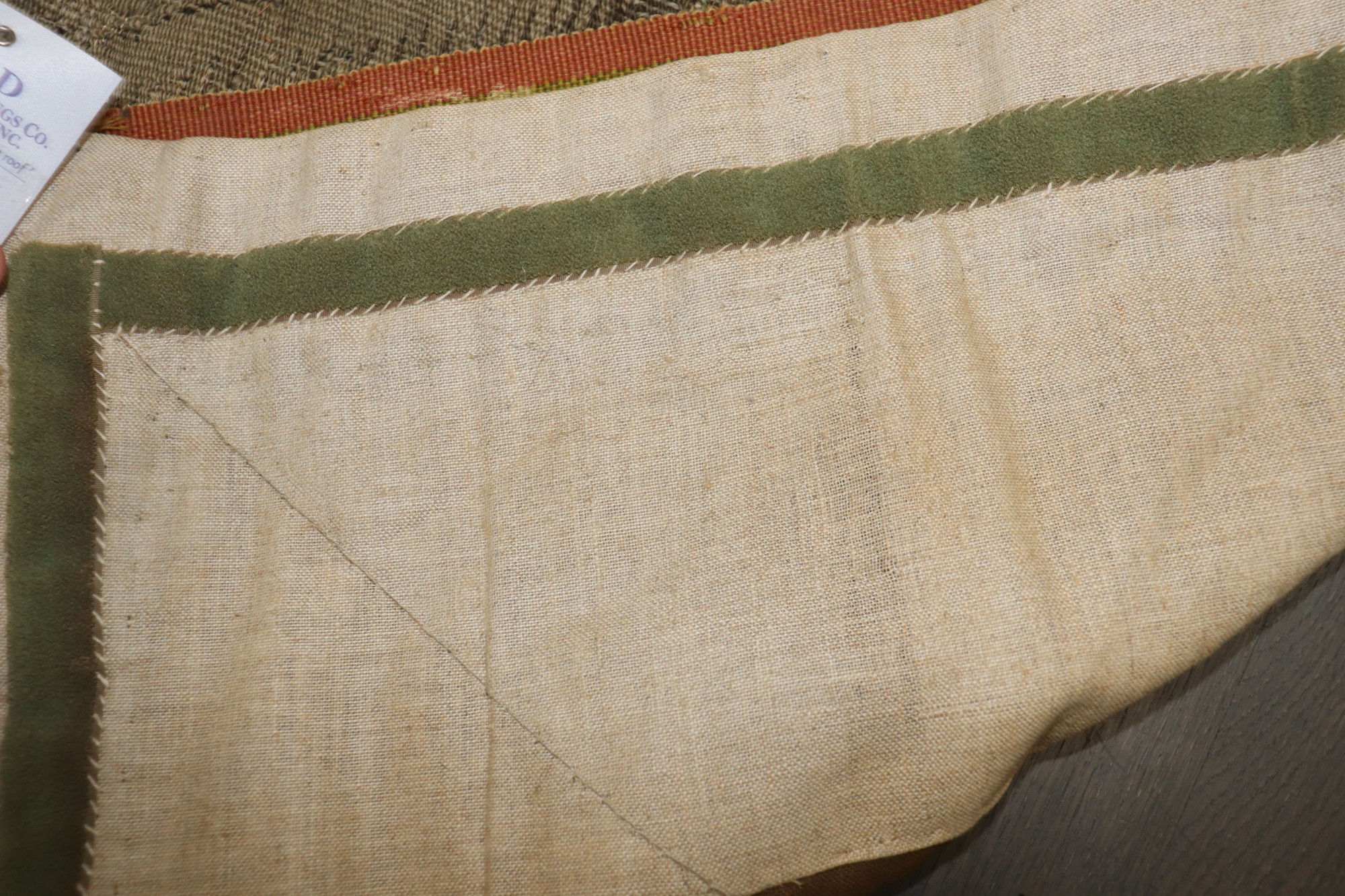
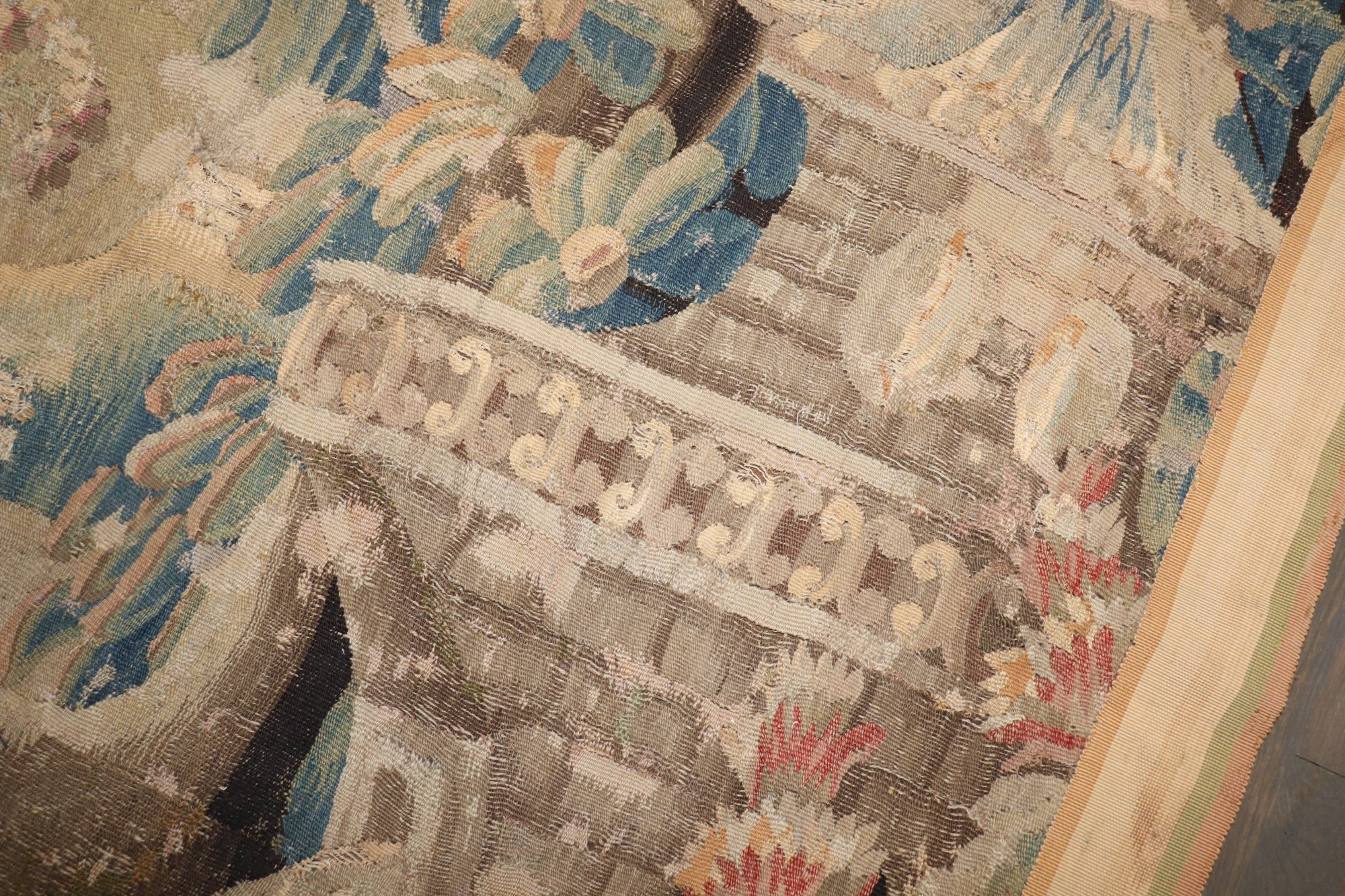
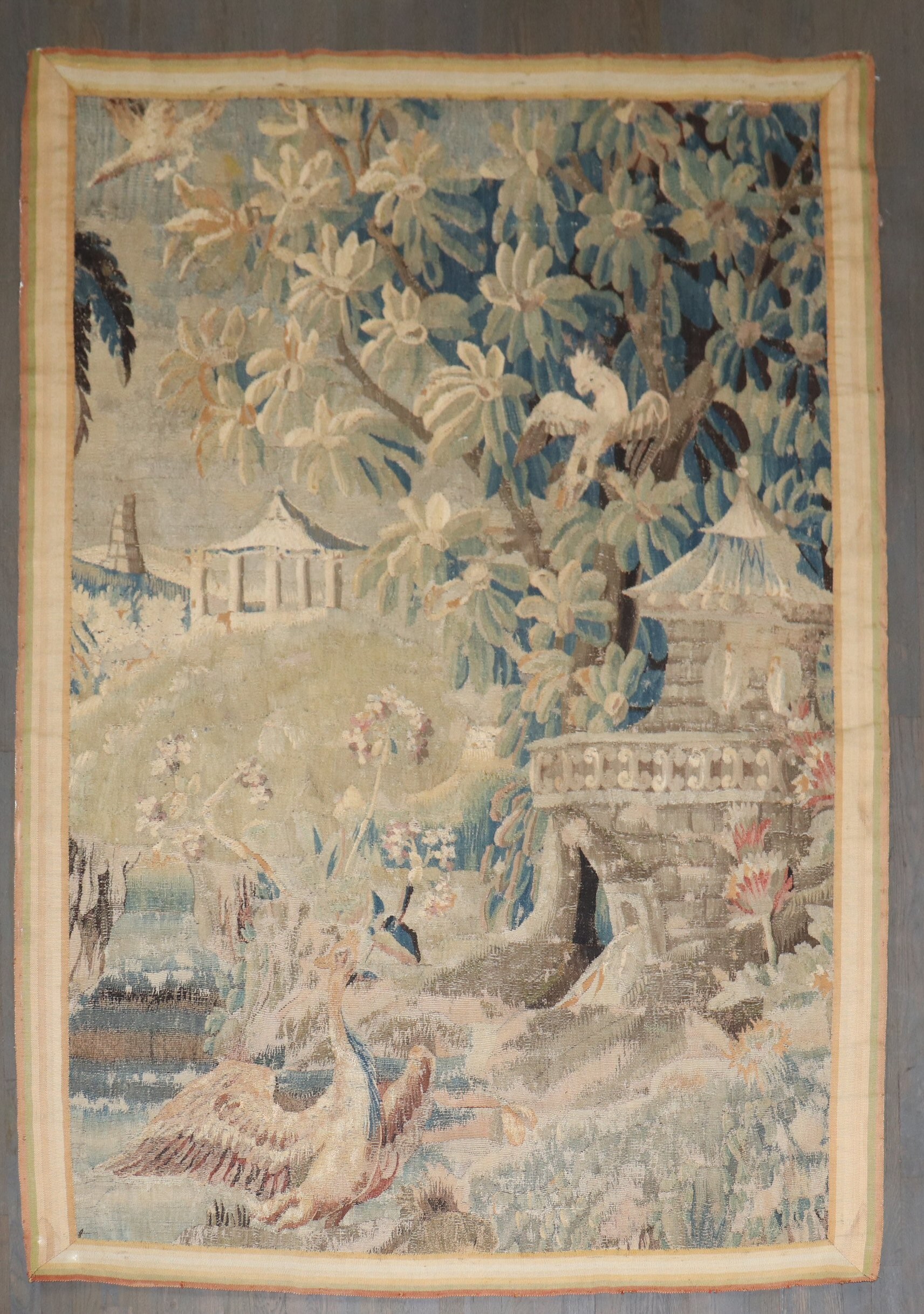
Late 19th Century French Tapestryrug no. j5037
Description
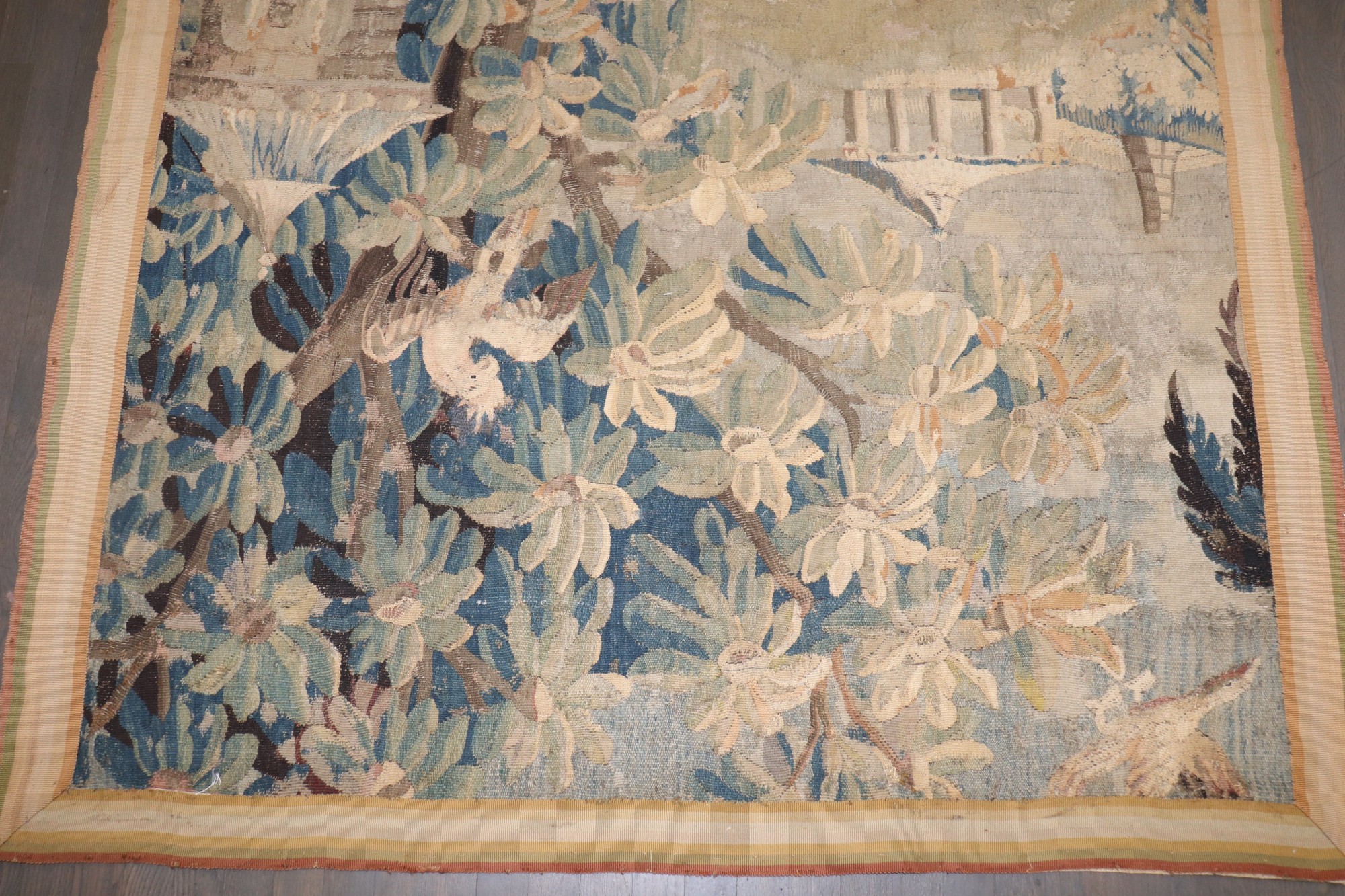
a late 18th-century French tapestry Measures: 5'4'' wide x 7'3'' long. Tapestries make integral part of the Flemish cultural heritage. Most of the tapestries have religious, mythological and historical subjects as well as hunting and harvest scenes. They are known for their high quality and extended use of colors. The oldest ones were made in the 13th century. The most important production centers were Doornik and Arras. These two centers got a lot of assignments of the Dukes of Burgundy. In the 14th century tapestries were also made in Bruges, Oudenaarde and Ghent. In the 16th century Brussels and Antwerp became important. Antwerp was also the distribution centre for the rest of Europe. In the 17th century the popularity faded and in the 18th century the making of tapestries in Flanders stopped
Details
| rug no. | j5037 |
|---|---|
| size | 5' 4" x 7' 3" (163 x 221 cm) |
| rug type | Tapestries/Aubusson |
| size / category | Intermediate |
| price | $9,000.00 |

Related Rugs